Understanding Dwell Time: How Long Attackers Stay Undetected Inside Your Systems

Introduction

In modern cybersecurity, organizations often focus heavily on how attackers get in, phishing emails, vulnerable applications, weak passwords, or misconfigured systems.

But a far more critical question is often ignored:

Once inside, how long do attackers stay undetected?

This is where the concept of dwell time becomes one of the most important indicators of cybersecurity maturity.

Dwell time reflects how long attackers operate freely inside your environment before being discovered.

The longer they remain undetected, the greater the potential damage.

Learn more about enterprise security solutions:
https://test.ambsan.com/services/cybersecurity

What Is Dwell Time in Cybersecurity?

dwell time in cybersecurity

Dwell time is the duration between:

  • Initial system compromise
  • Detection and containment of the attacker

In simple terms:

Dwell time = how long an attacker stays hidden inside your network

Why Dwell Time Matters More Than the Breach Itself

dwell time in cybersecurity

The real damage in a cyberattack does not happen at the point of entry, it happens during the silent phase afterward.

During dwell time, attackers:

  • Explore internal systems
  • Steal sensitive data
  • Escalate privileges
  • Move laterally across networks
  • Prepare ransomware or data theft operations

Modern frameworks such as the MITRE ATT&CK framework map these attacker behaviors in detail:

https://attack.mitre.org/

Understanding attacker behavior during this phase is critical because prevention alone is no longer enough, detection speed defines security maturity.

Average Dwell Time in Real-World Attacks

dwell time in cybersecurity

Research shows:

  • Global median dwell time: ~10–16 days
  • Some enterprises: 20–30+ days
  • Severe breaches: months or even longer

Industry insights:

  • IBM Security highlights that faster detection reduces breach cost
  • CrowdStrike reports increasing stealth-based attacks

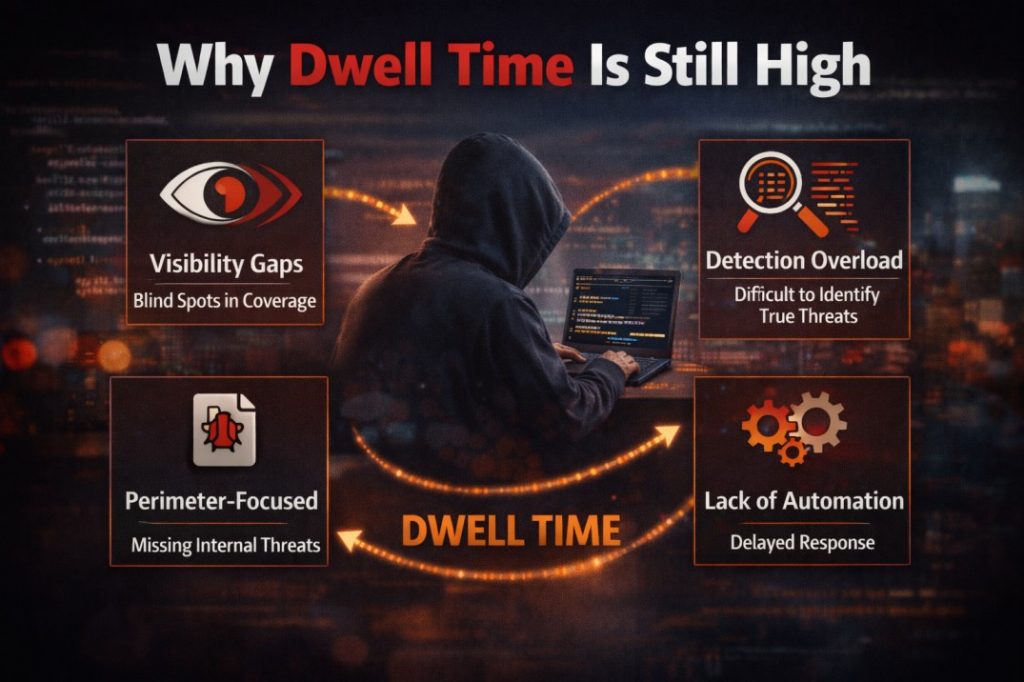
Why Dwell Time Is Still High

dwell time in cybersecurity

Despite advanced tools, dwell time remains high due to:

  • Lack of real-time monitoring
  • Alert fatigue in SOC teams
  • Limited threat visibility
  • Sophisticated attacker techniques
  • Delayed incident response

Impact of High Dwell Time

Long dwell time leads to:

  • Financial losses
  • Data breaches
  • Operational disruption
  • Regulatory penalties
  • Reputation damage

The longer attackers stay, the deeper the damage becomes.

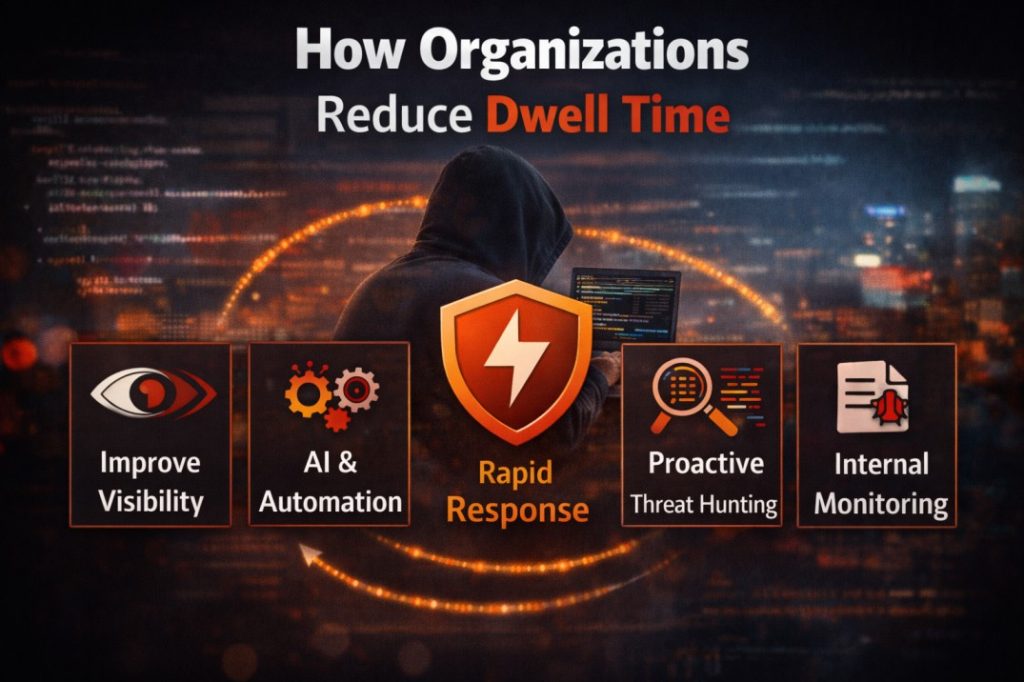
How Organizations Reduce Dwell Time

dwell time in cybersecurity

Key strategies include:

  • 24/7 SOC monitoring
  • Endpoint Detection & Response (EDR)
  • Threat hunting
  • Behavioral analytics
  • Automated incident response
  • Threat intelligence integration

Future of Dwell Time

Dwell time is gradually decreasing due to better detection systems, but attackers are also evolving.

The cybersecurity landscape is becoming a race between:

Detection speed vs attacker stealth

Organizations that invest in proactive defense will always stay ahead.

Final Thoughts

Dwell time is one of the most critical cybersecurity metrics because it reflects how long attackers operate freely inside a system.

Reducing it means:

  • Faster detection
  • Lower damage
  • Stronger security posture

Cybersecurity is no longer just about preventing breaches, it is about minimizing the time attackers have to act.

Strengthen Your Security with Ambsan Technologies

At Ambsan Technologies, we help organizations reduce dwell time through:

  • SOC-driven continuous monitoring
  • Advanced threat detection systems
  • Proactive threat hunting
  • Robust cybersecurity architecture

Frequently Asked Questions (FAQs)

1. What is dwell time in cybersecurity?

Dwell time is the duration between an attacker entering a system and being detected or removed. It measures how long a breach remains unnoticed inside a network.

2. Why is dwell time important?

It is important because longer dwell time allows attackers to steal data, move across systems, and cause greater damage before being stopped.

3. What is the average dwell time for cyberattacks?

On average, dwell time ranges from 10 to 16 days globally, although it can be much longer in poorly monitored environments.

4. How can organizations reduce dwell time?

Organizations can reduce dwell time by using SOC monitoring, threat hunting, EDR tools, behavioral analytics, and faster incident response systems.

5. Does lower dwell time mean better cybersecurity?

Yes. Lower dwell time means faster detection and response, which significantly reduces damage and improves overall cybersecurity resilience.