Understanding Dwell Time: How Long Attackers Stay Undetected Inside Your Systems
Introduction
In modern cybersecurity, organizations often focus heavily on how attackers get in, phishing emails, vulnerable applications, weak passwords, or misconfigured systems.
But a far more critical question is often ignored:
Once inside, how long do attackers stay undetected?
This is where the concept of dwell time becomes one of the most important indicators of cybersecurity maturity.
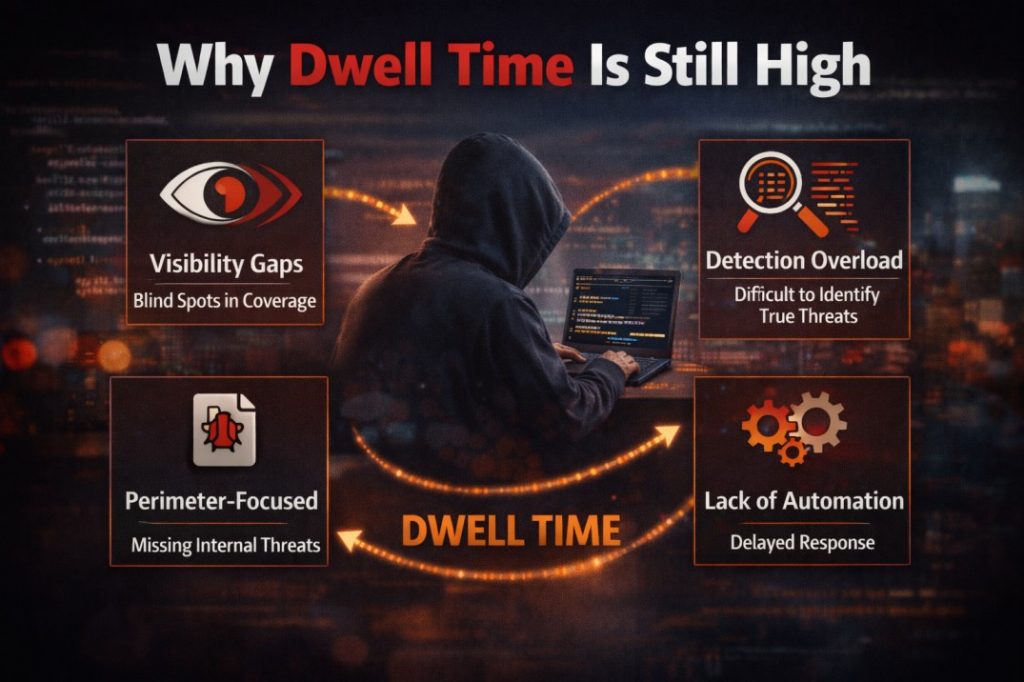
Dwell time reflects how long attackers operate freely inside your environment before being discovered.
The longer they remain undetected, the greater the potential damage.
Dwell time is the duration between an attacker entering a system and being detected or removed. It measures how long a breach remains unnoticed inside a network.
2. Why is dwell time important?
It is important because longer dwell time allows attackers to steal data, move across systems, and cause greater damage before being stopped.
3. What is the average dwell time for cyberattacks?
On average, dwell time ranges from 10 to 16 days globally, although it can be much longer in poorly monitored environments.
4. How can organizations reduce dwell time?
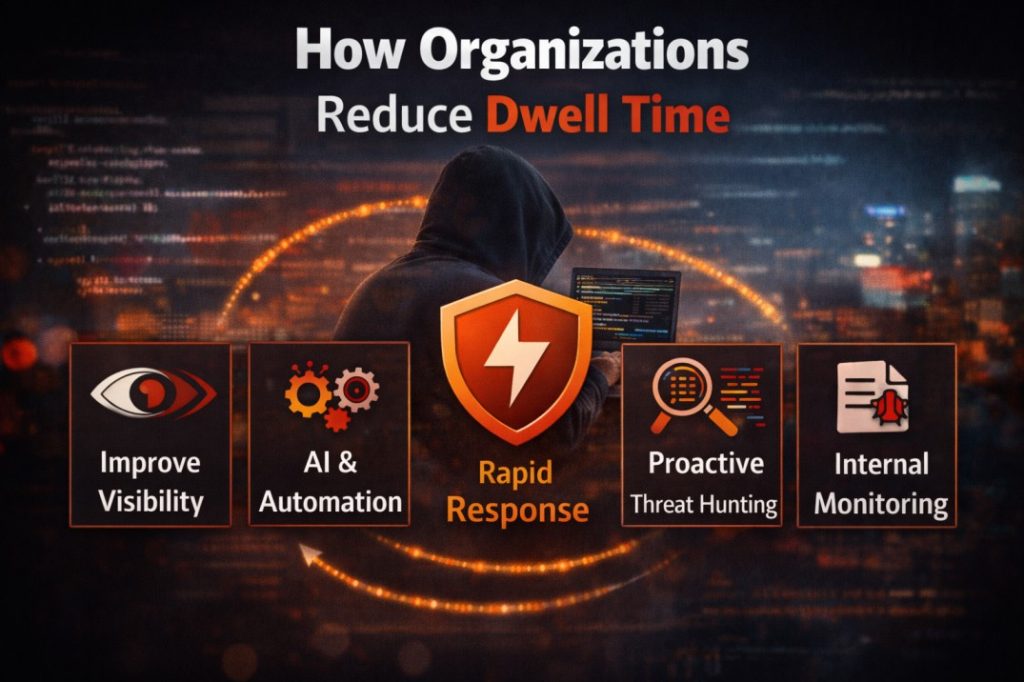
Organizations can reduce dwell time by using SOC monitoring, threat hunting, EDR tools, behavioral analytics, and faster incident response systems.
5. Does lower dwell time mean better cybersecurity?
Yes. Lower dwell time means faster detection and response, which significantly reduces damage and improves overall cybersecurity resilience.